


What is the working principle of the pneumatic sterile sampling valve?
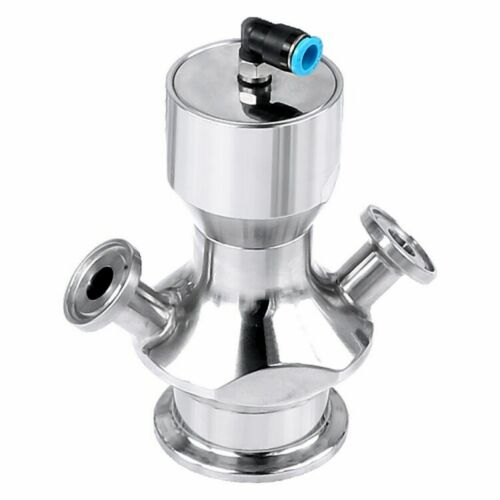
The pneumatic sterile sampling valve operates by opening the valve with air and closing it when the air supply is cut off, keeping the passage between the hoses open to maintain sterility. The sterile sampling valve is used for collecting sample materials inside tank equipment or pipelines, and requires sterilization treatment before and after each sampling. It can perform sterile sampling continuously and at any time. It is widely used in industries such as food, brewing, beverages, dairy products, toothpaste and cosmetics, biopharmaceuticals, etc.
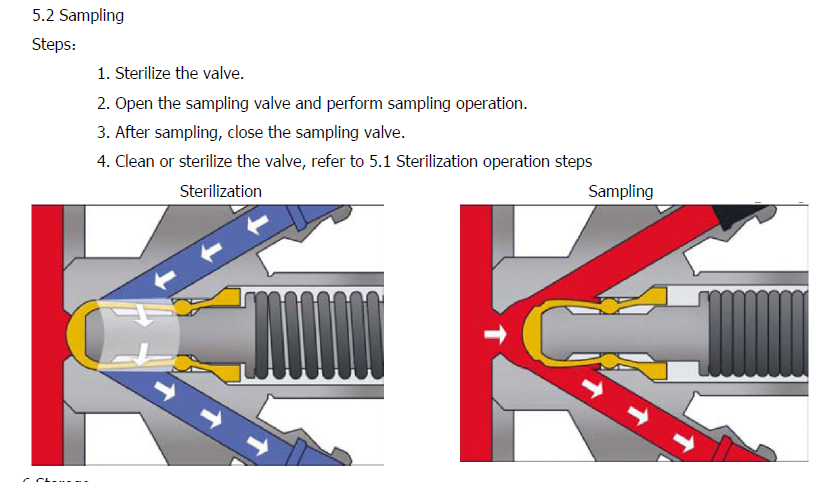
The working principle of the pneumatic sterile sampling valve: This sterile sampling valve is mainly composed of pneumatic components, valve body, and diaphragm sealing ring. When in the closed state, the valve core is pushed by the spring tension, and the sealing rubber head is pressed tightly against the material inlet of the valve body to achieve the sealing effect. If sampling is needed, steam or other sterilization media are introduced from one of the sampling ports (usually the lower one) to fill the entire sample chamber and then be discharged from another sampling port. After a certain period of action, the sample chamber and the sampling port will be in a sterile state. Then, air is fed in to contract the spring and relax the valve core, so that the sealing rubber head is separated from the material inlet of the valve body, allowing the sample to flow out through the sample chamber and be collected from the sampling port. After the sampling is completed, the air source is turned off, the spring is relaxed, and the valve core is again pressed tightly against the material inlet of the valve body. Clean water is introduced to discharge the residual liquid in the sample chamber (if the sample is a relatively clean medium such as sterile water, this step can be omitted). Then, sterilization media are injected for sealing and retention, and the process is repeated for the next sampling.