


Common Misconceptions in the Maintenance of Pump Mechanical Seals
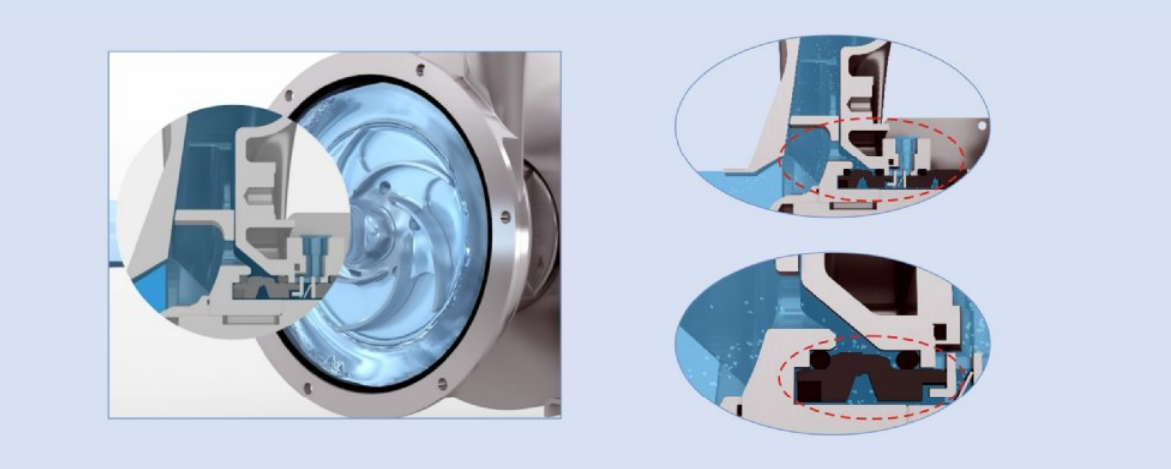
1. Greater spring compression yields superior sealing performance.
This is a misconception. Excessive spring compression accelerates wear of the friction pair and may even cause instantaneous thermal failure (e.g., “burning out”). Moreover, over-compression compromises the spring’s capacity to accommodate axial displacement of the rotating ring, thereby impairing end-face conformity and ultimately leading to seal failure.
2. The dynamic ring secondary seal should be installed with maximum tightness.
Over-tightening the dynamic ring secondary seal is counterproductive. First, it intensifies abrasive wear between the seal elastomer and shaft sleeve, resulting in premature leakage. Second, it impedes axial mobility and self-adjustment of the rotating ring—particularly detrimental under variable or transient operating conditions. Third, it induces excessive cyclic stress in the spring, increasing the risk of fatigue failure. Fourth, it may deform the elastomeric seal, compromising its sealing integrity.
3. The static ring secondary seal should be installed as tightly as possible.
Although the static ring remains stationary and benefits from adequate compression for reliable sealing, excessive tightening is harmful. First, it risks permanent deformation of the static ring seal, degrading sealing performance. Second, most static rings are fabricated from graphite—a brittle material highly susceptible to cracking under excessive installation force. Third, over-tightening complicates installation and disassembly, raising the likelihood of mechanical damage to the static ring during maintenance.
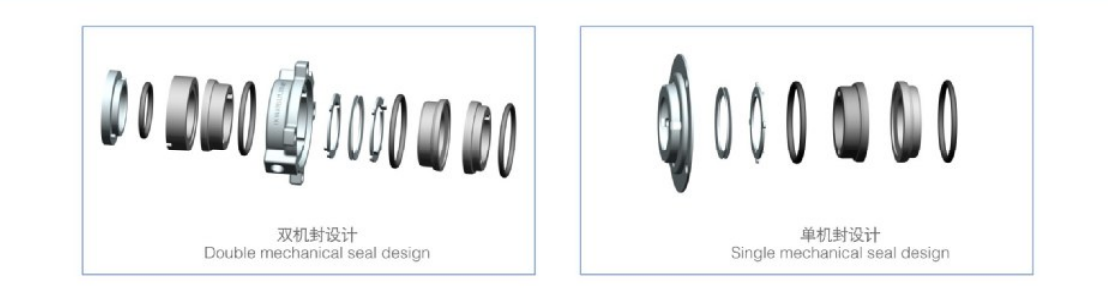
4. The impeller lock nut must be tightened to maximum torque.
Inter-shaft leakage—i.e., leakage between the shaft and shaft sleeve—is frequently misattributed solely to loosening of the impeller lock nut. In reality, multiple factors contribute to such leakage, including: degradation or extrusion of the inter-shaft gasket; shaft–sleeve misalignment; contamination (e.g., particulates or polymer deposits) in the inter-shaft interface; excessive dimensional tolerance at the shaft–sleeve mating surface; surface damage at the contact interface; gaps among shaft-mounted components; and excessively long thread engagement on the shaft end. Over-torquing the lock nut accelerates gasket relaxation and loss of compressive resilience. Conversely, applying an appropriate, manufacturer-recommended torque ensures sustained gasket elasticity and enables self-locking behavior during operation—thereby maintaining effective inter-shaft sealing.
5. Replacement with a new mechanical seal always improves performance.
While newly installed seals often exhibit enhanced initial performance, indiscriminate replacement is unwarranted. Substandard material selection, dimensional incompatibility, or improper specification can degrade sealing reliability. Notably, in applications involving polymeric or permeable media, retaining a well-conditioned static ring may be preferable: prolonged static seating promotes beneficial deposition of polymers and fine particulates at the static ring–seat interface, enhancing sealing effectiveness through natural “self-sealing” mechanisms.
6. Disassembly and repair are inherently preferable to non-intervention.
Upon detecting mechanical seal leakage, practitioners often default to immediate disassembly. However, leakage does not invariably indicate component failure. In many cases, leakage can be resolved by optimizing operational parameters (e.g., pressure, temperature, flow rate) or performing minor, non-invasive adjustments to seal compression or alignment. Such conservative interventions prevent unnecessary part replacement, reduce downtime, support diagnostic skill development, facilitate empirical maintenance knowledge accumulation, and ultimately elevate overall maintenance quality and reliability.