


Why are High discharge head Pumps Unsuitable for too Low discharge head applications?
The appropriate selection of water treatment equipment constitutes a fundamental competency for all engineering designers. As core components responsible for fluid conveyance and elevation, pumps are integral to virtually all water treatment systems. Consequently, rigorous pump selection methodology is critical to system performance, efficiency, and long-term reliability.
During the selection process, designers must first ascertain the required flow rate and total dynamic head (TDH)—two essential hydraulic parameters. Without accurate specification of both, pump selection cannot be technically justified or operationally sound.
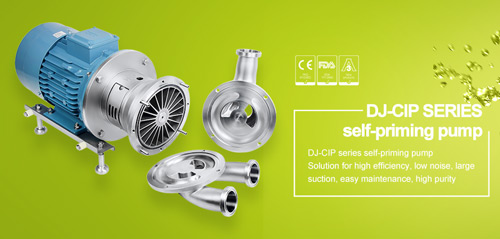
A common misconception among end users is that selecting a pump rated for a significantly higher head than required will provide greater operational flexibility—particularly under variable or uncertain head conditions. This belief often leads to the procurement of over-specified, high-head pumps for low-head applications.
However, for centrifugal pumps of fixed impeller geometry, shaft power consumption is directly proportional to both the actual head developed and the volumetric flow rate. Under reduced head conditions, the pump operates further right on its performance curve, resulting in increased flow and correspondingly higher motor current draw. Conversely, at lower flow rates, power demand decreases. To safeguard against motor overload, industry practice mandates that the minimum allowable operating head shall not fall below 60% of the pump’s rated (nameplate) head.
Therefore, deploying a high-head pump in a low-head application poses significant risks: excessive flow may cause sustained motor overloading, leading to thermal stress, accelerated insulation degradation, and—in extreme cases—catastrophic motor failure. In emergency scenarios where such mismatched operation is unavoidable, flow regulation must be implemented via an outlet control valve installed on the discharge piping. Preferably, a self-actuating pressure-regulating valve—or, where appropriate, a manually adjustable throttling device—should be employed to restrict flow and maintain motor loading within safe limits. Continuous monitoring of motor winding temperature is essential; should overheating occur, immediate corrective action—including flow reduction or shutdown—is required to prevent irreversible damage. Notably, attempts to mitigate overload by reducing supply voltage are counterproductive: such measures increase slip and stator current, thereby exacerbating thermal loading rather than alleviating it. In fact, standard practice at centrifugal-pump irrigation stations explicitly incorporates discharge valves precisely to manage motor load during startup and transient operation: the valve must be fully closed prior to pump startup and gradually opened thereafter to ensure inrush current remains within design limits.
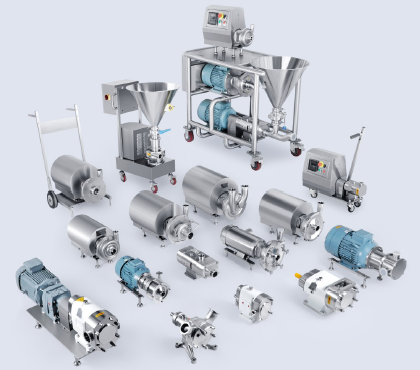
Regarding series pump configurations—e.g., installing a low-head pump upstream of a high-head pump—the arrangement requires strict adherence to pressure compatibility constraints: the discharge pressure of the upstream (low-head) pump must not exceed the maximum allowable inlet pressure of the downstream (high-head) pump; otherwise, structural integrity and seal reliability may be compromised, posing risks of leakage or mechanical failure.
In summary, head specification is a decisive factor in pump selection. Prior to procurement, the required TDH—or equivalently, the necessary discharge pressure—must be rigorously determined through hydraulic analysis. Only then can an appropriately rated pump be selected to ensure safe, efficient, and sustainable operation.