


How to choose sanitary valve ?
Sanitary pumps and valves are fluid control devices specifically designed for industries with strict hygiene requirements such as food, pharmaceuticals, cosmetics, and biotechnology. Their core feature is to meet the demands of high cleanliness, no contamination, easy cleaning, and maintenance. The following is a detailed introduction to sanitary pumps and valves:
Main types
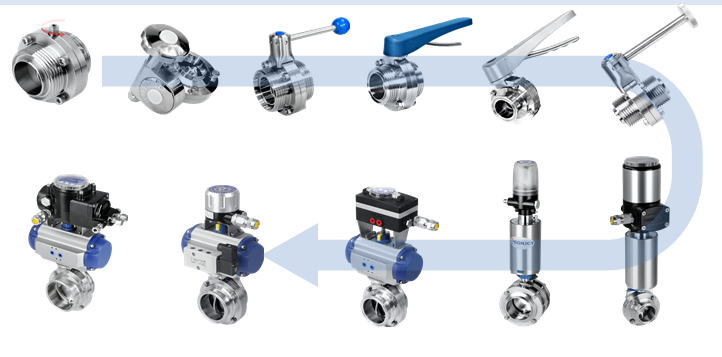
Sanitary butterfly valve: The valve body and valve plate are made of stainless steel, and the valve seat is commonly made of food-grade elastomers such as EPDM, NBR, SILICONE and VITON. It features a simple structure, large flow capacity, low resistance, and quick opening and closing. It is suitable for controlling and regulating large flow fluids and is often used in the pipeline systems of food, beverage, and pharmaceutical industries.
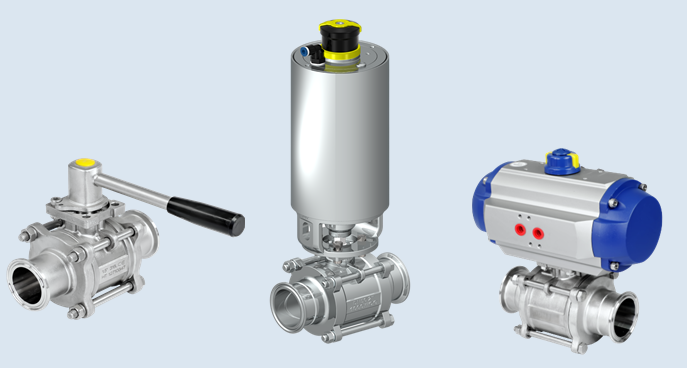
Sanitary ball valve: The valve body and valve core are made of stainless steel, and the valve seat is made of materials such as PTFE and RPTFE. It has a fully covered valve seat design with no dead zones and good sealing performance. It has a wide temperature range (-20°C to +150°C) and is suitable for fluid transportation and control with high cleanliness requirements, such as in the pharmaceutical, biopharmaceutical, and cosmetic industries.
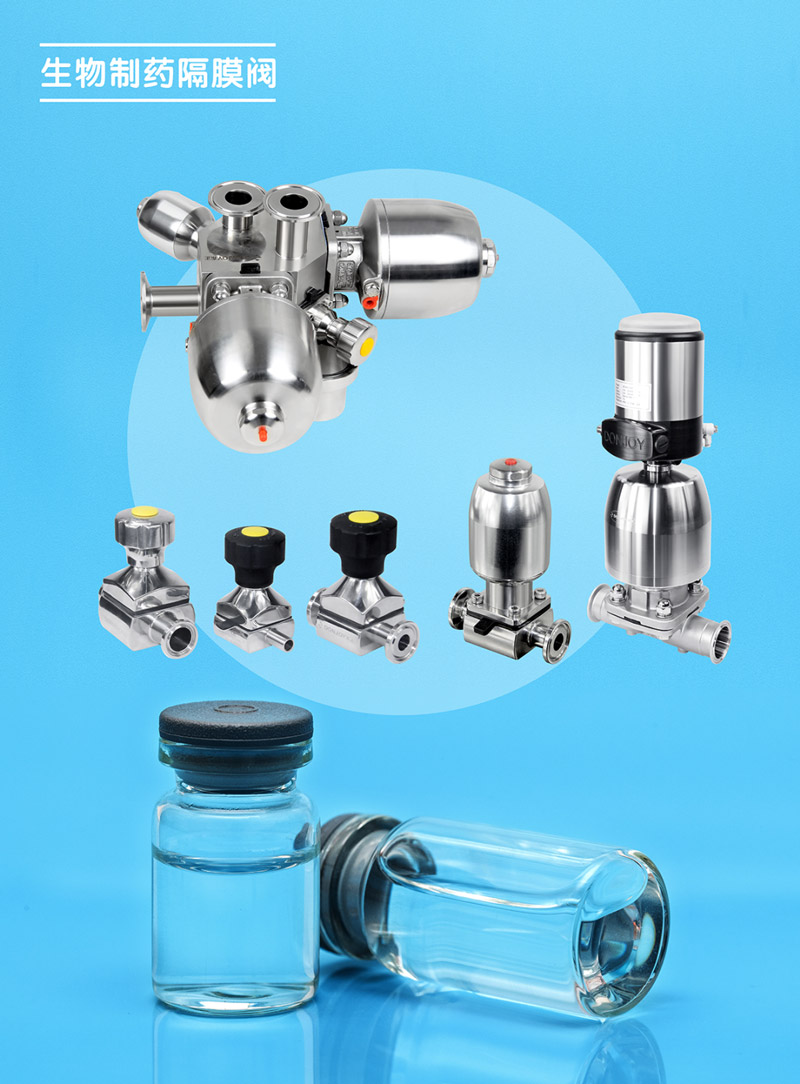
Sanitary diaphragm valve: The valve body and valve cover are made of stainless steel, and the diaphragm is made of materials such as EPDM and EPDM+PTFE. It achieves the on-off and regulation of fluids through the elastic deformation of the diaphragm. It has no dead zones and is easy to clean, making it suitable for fluid control in aseptic environments, such as in the pharmaceutical, brewing, and biotechnology industries.
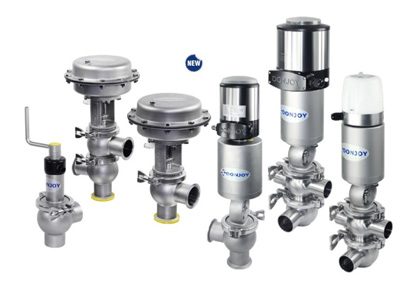
Sanitary angle seat valve: The valve body and valve core are made of stainless steel, and the valve seat is made of PTFE. It has an angular structure, allowing for high flow rate transportation and fast response. It is suitable for frequent short-term use conditions, such as in the fluid control of food, beverage, and pharmaceutical industries.
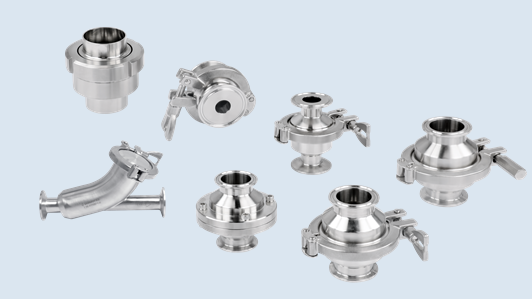
Sanitary check valve: It is used to prevent fluid backflow. The valve body and valve core are made of stainless steel, and the valve seat is made of PTFE. It is suitable for pipeline systems in food, beverage, pharmaceutical, and cosmetic industries, ensuring unidirectional fluid flow and preventing contamination and cross-contamination.
2. Technical features
Material Requirements: The main body is typically made of 304 or 316L stainless steel to ensure corrosion resistance and hygiene. Seals should be made of food-grade elastomers such as EPDM, silicone rubber, or PTFE, which have properties of acid and alkali resistance, high-temperature resistance, and low permanent compression set.
Surface Treatment: Both the inner and outer surfaces need to be finely polished with a roughness Ra value of ≤0.8μm (≤0.4μm in some scenarios). The inner wall of the flow channel should be electronically polished to 0.5μm (240 mesh) to ensure no dead corners and prevent medium residue and bacterial growth.
Structural Design: A full-bore or straight-through structure is adopted to ensure a smooth flow channel without dead corners, supporting online cleaning (CIP) and online sterilization (SIP) without disassembly for cleaning.
Connection Methods: Quick-install, welded, threaded, or clamp connections are provided to meet the rapid disassembly and assembly requirements of different scenarios.
Performance Indicators: The working pressure should be ≥1.0MPa, with some scenarios requiring a 1.1 times pressure test. The working temperature ranges from -10℃ to +150℃, suitable for high-temperature sterilization and low-temperature environments. The leakage rate should be less than 0.01% of the rated flow. The valve should not leak when closed under 1.1 times the working pressure and should withstand 2 times the working pressure when open.
3. Application Fields
Sanitary pumps and valves are widely used in the food, pharmaceutical, cosmetics, biotechnology, brewing, beverage, dairy, and fine chemical industries for fluid transportation, control, regulation, and sampling, ensuring the hygiene and safety of the production process and product quality.
4. Key Points for Selection
Medium characteristics: Select appropriate materials and structures based on the properties of the fluid (such as corrosiveness, viscosity, temperature, pressure, etc.).
Flow and pressure requirements: Choose pumps and valves of suitable specifications and models according to the actual flow and pressure demands of the working conditions.
Sanitary standards: Ensure that the pumps and valves comply with international sanitary standards (such as 3A, DIN, SMS, ISO, etc.) and industry norms, and obtain relevant certifications (such as FDA, EHEDG, etc.).
Operation and maintenance: Consider the operation mode of the pumps and valves (manual, pneumatic, electric, etc.), ease of maintenance, and reliability, and select products that are suitable for on-site conditions.
The selection of sanitary pumps and valves requires a comprehensive consideration of medium characteristics, working condition requirements, sanitary standards, and operation and maintenance factors to ensure the hygiene and safety of the production process and product quality.